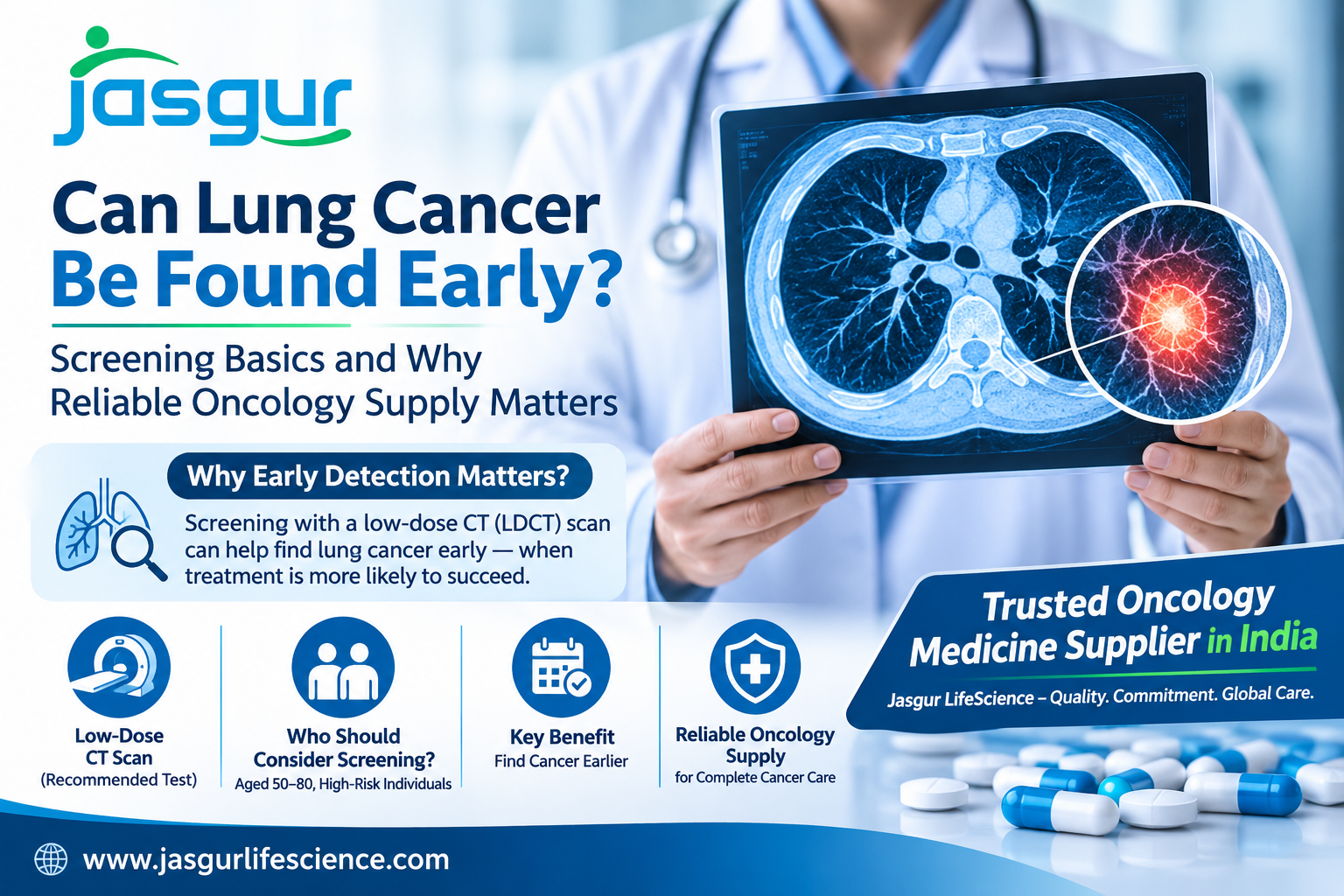
Can Lung Cancer Be Found Early? Screening Basics and Why Reliable Oncology Supply Matters
Lung cancer is among the most serious cancers worldwide, partly because symptoms often appear late. By then, the disease may already be advanced. Screening can change that. This blog explains how lung cancer screening works, who it is meant for, and why dependable access to quality medicines matters throughout cancer care. oncology medicine supplier in India.
Why Early Detection Matters
Screening means testing people who have no symptoms. When lung cancer is found while it is small and before it has spread, treatment is more likely to succeed. The trouble is that early signs, such as a lingering cough, are easily mistaken for an infection or the lasting effects of smoking, which can delay diagnosis. Anyone with symptoms should see a doctor right away. Testing for symptoms is diagnosis, not screening.
Which Test Is Used?
According to the American Cancer Society (ACS), chest X-rays have not been shown to help most people live longer, so they are not recommended for screening. The preferred option is the low-dose CT (LDCT) scan. Research shows that yearly LDCT scans can lower the risk of dying from lung cancer in higher-risk people. The scan is painless and takes only a few minutes. No injection or swallowed contrast is needed, though the whole visit can last up to half an hour.
Who Should Consider Screening?
The ACS recommends yearly LDCT screening for people aged 50 to 80 who smoke or used to smoke and have a smoking history of at least 20 pack-years. One pack-year equals smoking about a pack a day for a year. People should first talk with a doctor about the benefits, limits and possible harms. Those who still smoke should be offered help to quit, because screening is no substitute for quitting. It is also not advised for people whose serious health problems would limit their life expectancy or prevent them from having treatment.
Benefits and Limits
The main benefit is finding cancer earlier. But LDCT does not detect every lung cancer, and some findings turn out not to be cancer. These may still need more scans or, less often, a biopsy. Each scan also involves a small amount of radiation, more than a chest X-ray but less than a standard CT. Screening should take place at a facility with the right scanner and experience, and with specialists available for follow-up.
Access to Treatment Starts With a Reliable Supply Chain
Once cancer is diagnosed, timely access to quality medicines becomes a priority. This is where a dependable oncology medicine supplier in India plays a quiet but vital role. Jasgur LifeScience is an India-based pharmaceutical manufacturer and exporter that supports importers, distributors and healthcare businesses with oncology medicines. Its work is backed by WHO-GMP-standard quality, export documentation and coordinated shipments. As an anticancer medicine supplier in India, Jasgur LifeScience works with authorised buyers, subject to product availability and local regulatory requirements.
FAQs
Q1. Can lung cancer be found early?
A1: Yes, in some people. Screening tests people who have no symptoms, and lung cancer found while it is small and before it has spread is more likely to be treated successfully. Anyone who already has symptoms should see a doctor right away, because that is diagnosis rather than screening.
Q2. Which test is used to screen for lung cancer?
A2: A yearly low-dose CT (LDCT) scan is the recommended screening test for people at higher risk. Chest X-rays are not recommended, because they haven't been shown to help most people live longer.
Q3. Who should consider lung cancer screening?
A3: The American Cancer Society recommends yearly LDCT screening for people aged 50 to 80 who smoke or used to smoke and have a smoking history of at least 20 pack-years. People should talk with a doctor about the benefits, limits and possible harms before deciding.
Q4. Is an LDCT scan painful or risky?
A4: The scan is painless and takes only a few minutes. It involves a small amount of radiation, more than a chest X-ray but less than a standard CT. Some findings turn out not to be cancer but may still need more scans or, less often, a biopsy.
Q5. Does screening replace quitting smoking?
A5: No. Screening is not a good alternative to quitting. Stopping smoking is the most effective way for people who smoke to lower their risk of getting and dying from lung cancer.
Final Thoughts
Screening gives higher-risk people a chance to catch lung cancer sooner, and reliable supply partners help make sure treatment is available when it is needed. If you are looking for a trusted oncology medicine supplier in India, Jasgur LifeScience welcomes your enquiry.
Reference Link -
https://www.cancer.org/cancer/types/lung-cancer/detection-diagnosis-staging/detection.html