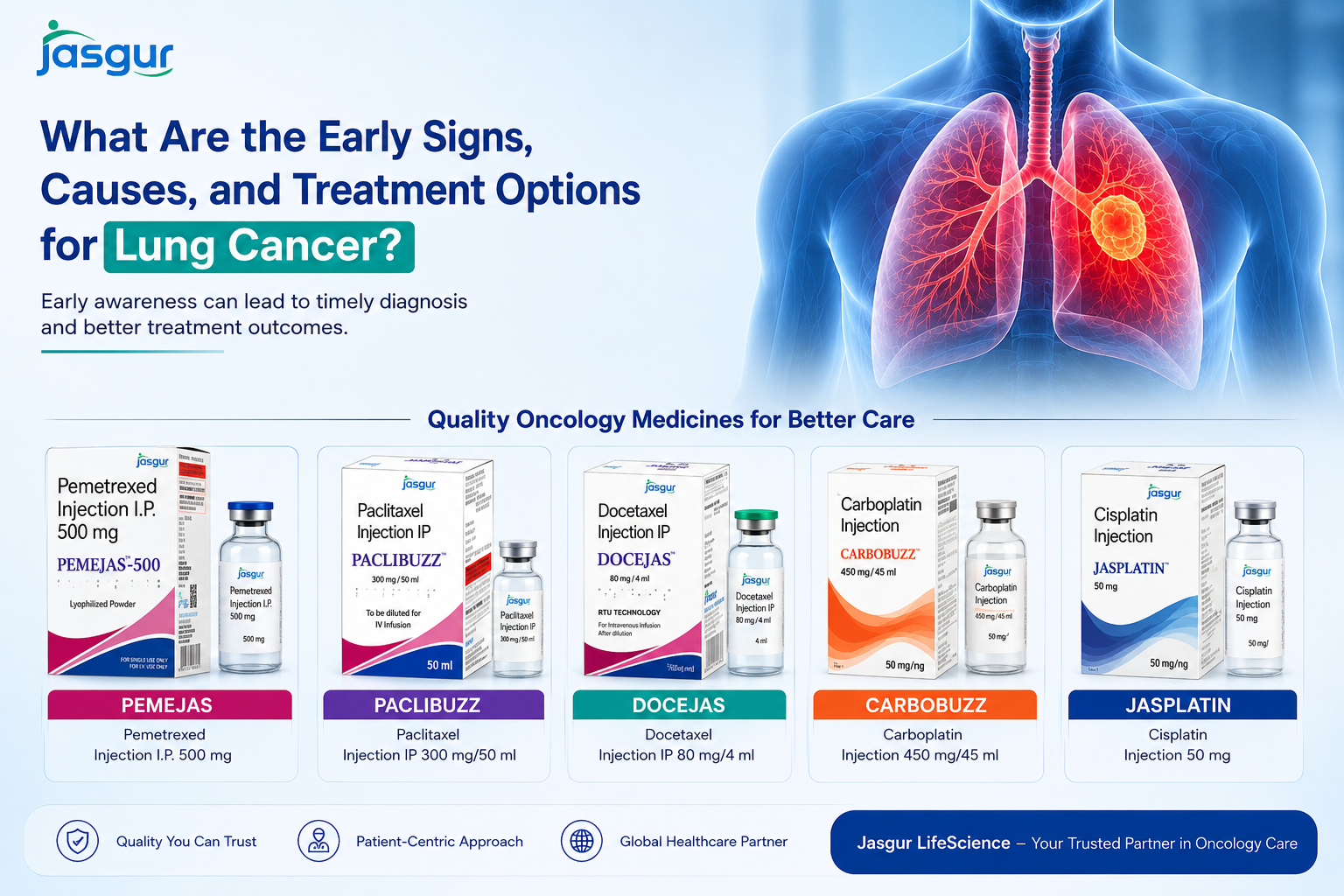
What Are the Early Signs, Causes, and Treatment Options for Lung Cancer?
Lung cancer is one of the most commonly diagnosed cancers that may affect individuals with different risk factors. Being aware of its early symptoms, causes and treatment options may facilitate timely medical consultation and appropriate treatment. Early detection can help healthcare professionals create an efficient, personalized treatment strategy.
What Are the Early Signs of Lung Cancer?
Lung cancer symptoms may vary according to the type and severity of the cancer. The most common signs are:
-
Chronic or worsening cough
-
Coughing up blood
-
Pain or discomfort in the chest
-
Breathlessness
-
Unexplained weight loss
-
A persistent weakness or fatigue
-
Recurrent respiratory infections
-
Voice changes or hoarseness
-
A loss of appetite
Certain people might not show obvious symptoms in the beginning stages. Thus, people with significant risk factors should talk about an appropriate screening process and evaluation with a physician.
What Causes Lung Cancer?
Smoking cigarettes is among the main risk factors for lung cancer. However, lung cancer may also be seen in those who have never smoked. Other risk factors for lung cancer include smoking, secondhand smoke, asbestos, radon and specific work-related contaminants, air pollution, as well as family history and previous exposure to radiation.
A risk factor does not necessarily mean that one is likely to develop lung cancer. It is also possible for lung cancer to occur with no obvious risk reason. It is crucial to have a medical evaluation whenever persistent or alarming signs develop.
How Is Lung Cancer Diagnosed?
Doctors might employ several methods to determine whether a patient has lung cancer. They can use physical examinations, medical history, and imaging tests, such as chest X-rays or CT scans, as well as pathology or laboratory tests. A biopsy is often required to confirm the presence of cancer and determine its type.
The process of diagnosis and staging aids doctors in determining if it is localized cancer or has spread and helps in choosing the best treatment option.
What Are the Treatment Options for Lung Cancer?
Treatment is based on various factors like the type of cancer and stage, molecular features, general health, and previous treatment. Depending on the particular patient's situation, treatment can consist of chemotherapy, surgery, radiation therapy, targeted therapy, immunotherapy, or a combination of these methods.
The term "targeted" medicine is used when certain molecular changes are detected. For example, drugs that contain sunitinib 50 mg and sorafenib 200 mg are targeted oncology drugs that are used to treat specific cancers; however, they shouldn't be considered to be universal therapies for patients with lung cancer. Other oncology medications, like pomalidomide, capecitabine, bortezomib and bendamustine, are utilized for specific cancers and treatments instead of being used routinely for the majority of lung cancer patients.
Choosing a Reliable Oncology Medicines Partner
Access to high-quality medicines is an essential aspect of cancer treatment. Jasgur LifeScience works as an Oncology Medicines Manufacturer and Anticancer medicine provider, providing an assortment of oncology as well as special pharmaceutical products for health, as well as a pharmaceutical partner.
As a supplier of anticancer medicines, Jasgur LifeScience focuses on an efficient supply of pharmaceuticals along with product quality and customer service for both international and domestic markets. Its Oncology portfolio comprises a range of oral medications and injectable formulas to meet different therapeutic needs.
(FAQs)
Q1. What are the signs that indicate early onset in lung cancer?
A1: The most common symptoms are a constant cough or chest pain, shortness of breath and bloody coughs—unexplained weight loss as well as hoarseness, fatigue, and persistent respiratory infections.
Q2. What are the primary reasons for lung cancer?
A2: Smoking cigarettes is a significant risk factor. Other causes include secondhand smoke, exposure to radon, asbestos, air pollution, specific workplace chemicals, radiation exposure, as well as family background.
Q3. Can non-smokers develop lung cancer?
A3: Yes. While smoking cigarettes significantly increases the risk of developing lung cancer, it may also occur in those who haven't smoked due to genetic, environmental, as well as occupational factors.
Q4. How is lung cancer diagnosed?
A4: Doctors can use medical history, physical exams, chest X-rays, CT scans, as well as other tests to diagnose it. A biopsy might be necessary in order to verify the diagnosis as well as identify the type of cancer.
Q5. What are the treatments available to treat lung cancer?
A5: Based on the kind and stage of the disease, treatment options could consist of surgery, chemotherapy, radiation, targeted therapy, immunotherapy or a combination.
Conclusion
Being aware of possible signs of lung cancer and obtaining an evaluation from a medical professional promptly is crucial for proper diagnosis and treatment planning. Since treatment is different between patients and the treatment for cancer is not always predictable, treatments must be given under qualified medical supervision. Jasgur LifeScience supports the pharmaceutical industry with an extensive range of oncology products and supply solutions that are reliable for its role as an Oncology Medicines Manufacturer and Anticancer Medicines Supplier.
Cancer Medicine Name -