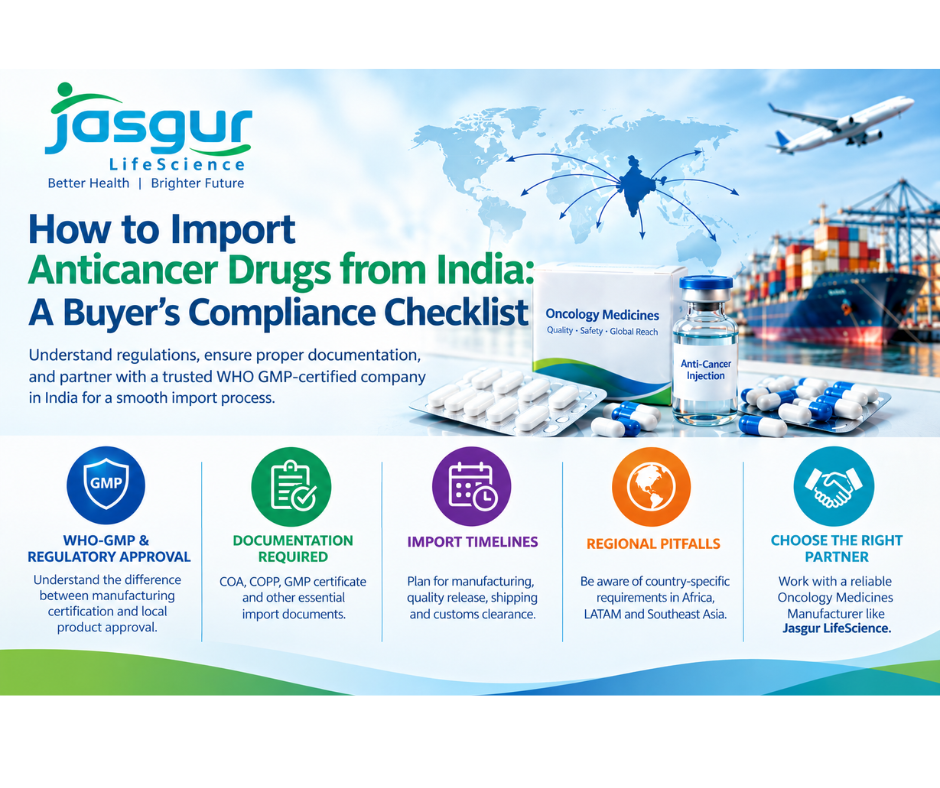
How to import anticancer drugs from India: A buyer's compliance checklist
Verifying the manufacturing standards of an Indian pharmaceutical supplier should be your first step when choosing a supplier. A WHO-GMP-certified company in India adheres to Good Manufacturing Practices that support consistency, controlled manufacturing processes, and product safety.
The WHO-GMP certificate does not mean a medicine will be approved for sale by every country that imports it. Buyers need to understand the differences between local product approval and manufacturing certification.
WHO-GMP certification is a sign that a manufacturing facility adheres to recognized quality management practices. The regulatory authority of the importing country may require separate approvals such as product registration, marketing authorizations, import permits, or other approvals.
Before placing an order, the buyer should confirm that:
-
Valid GMP certification of the manufacturer
-
The oncology product required is registered in the destination country
-
An import license is required
-
If the product is an anticancer medicine, it may require special authorization.
-
The documents of the manufacturer must meet local regulations.
Working with an experienced Oncology Medicines manufacturer can help buyers understand the documentation requirements and compliance requirements of international pharmaceutical supply.
Documents essential for the importation of anticancer drugs
Documentation plays a crucial role in the importation of pharmaceuticals. Buyers need to have quality, manufacturing, and regulatory documents. Specific requirements vary between countries and products.
Certificate of Analysis (COA)
A Certificate of Analysis is a valuable source of information on the quality of a batch of pharmaceuticals. This may include information such as assays, physical characteristics, and other quality specifications. Buyers must ensure that COAs are issued for the correct batch and that all testing data is in compliance with the requirements of the destination country.
Certificate of Pharmaceutical Product
Regulatory authorities may request a Certificate of Pharmaceutical Product, also known as COPP, as part of the pharmaceutical registration or import procedure. The requirements and their applicability may vary based on the destination markets.
GMP Certificate
A valid GMP certification helps to demonstrate that a manufacturing facility follows recognized Good Manufacturing Practices standards. Before purchasing, buyers should confirm the validity of the certificate and its issuing authority.
Additional documents are required depending on the country of destination.
-
Registration of products or marketing authorization
-
Import license
-
Commercial invoice
-
Packing list
-
Certificate of Origin
-
Where required, batch manufacturing records
-
Stability data
-
Specifications
-
Documentation for shipping and temperature control, if applicable
A trustworthy WHO GMP-certified company in India will be able to provide the appropriate documentation for export and regulatory processes.
Importation Timelines Typical
Import timelines are subject to significant variation. The timelines for imports can vary significantly.
The process is usually easier for repeat orders of a product that has already been approved, as the buyer will already have all the required regulatory approvals and documentation from the supplier. Importing new products or first-time imports can take a long time because the regulatory authorities might require additional information, such as samples, documents, product registration, or document verification.
Buyers must therefore set a realistic timetable covering:
Supplier qualification – Documentation – Regulatory approval – Manufacturing – Quality release Shipment — Customs clearance and delivery
By planning, you can minimize the impact of unexpected delays.
Common regulatory and customs pitfalls by region
Africa
The registration and import requirements for African pharmaceutical markets may vary from country to country. The approval of one African market does not automatically apply to the rest of the region.
Common challenges include incomplete import documents, product registration requirements, and customs classification issues. National authorities may also request additional documentation.
Latin America (LATAM)
Pharmaceutical products can be regulated in detail by LATAM countries. The requirements may differ in terms of product registration, language, certifications, and import authorization.
Before shipping, buyers should check the country's requirements. Consistent information on invoices, certificates, and packaging can reduce the chances of customs issues.
Southeast Asia
Southeast Asian markets have their own country-specific regulations. Importers will need to adhere to local requirements for product registration, licensing, labeling, and documentation.
Buyers should consult with an importer or regulatory partner in the destination country to make sure that the product and its documentation are compliant with local rules.
Selecting the Right Indian Pharmaceutical Partner
When planning to import oncology medicines from India, selecting the right supplier is a crucial decision. Buyers should consider manufacturing capabilities, export experience, and documentation support, as well as product portfolio, communication processes, and quality systems.
Jasgur LifeScience is a pharmaceutical company that focuses on international pharmaceutical supply and quality-oriented manufacturing. Jasgur LifeScience is an experienced Oncology Medicines manufacturer that works with pharmaceutical companies and partners who are looking for reliable oncology products.
Buyers should verify the requirements of the destination country with the regulatory authority before finalizing the supplier.
FAQs
Q1. Is WHO-GMP certification enough to allow me to import oncology drugs?
A1: No. The WHO-GMP certificate demonstrates compliance with manufacturing standards, but the importing nation may require separate registration of products, import authorizations, or other regulatory approvals.
Q2. What documents are commonly required for the importation of anticancer medicines from India?
A2: Documents that are commonly used include COA, COPP (Certificate of Origin), GMP Certificate, Commercial Invoice, Packing List, Product Registration Documents, and Import Permits, depending on where the product is going.
Q3. How long does it take to import pharmaceuticals from India?
A3: The timeline depends on product registration, regulatory clearances, manufacturing and documentation, shipping, and customs clearance. Newly registered products can move more quickly than existing approved products.
Q4. Why should you work with a seasoned Oncology Medicines manufacturer?
A4: A manufacturer with experience can provide the product information, documentation on quality, certifications of manufacturing, and export support needed for the market.
The conclusion
In India, pharmaceutical distributors and healthcare providers can access a wide range of anticancer products. Successful international procurement is dependent on regulatory compliance and accurate documentation.
When buyers are researching the import requirements of anticancer drugs, it is important to differentiate between WHO-GMP manufacturing and destination-country approval. Importing anticancer drugs can be significantly improved by preparing documents like COA, COPP, and GMP certificates.
Jasgur LifeScience is a WHO GMP-certified company in India that can help international buyers develop a structured approach for sourcing oncology drugs while maintaining regulatory and quality concerns at the forefront of their procurement processes.